POLYTEC PASSION CREATES INNOVATION

“… are quite satisfied with the ­results …”

Interview with the Board of Directors

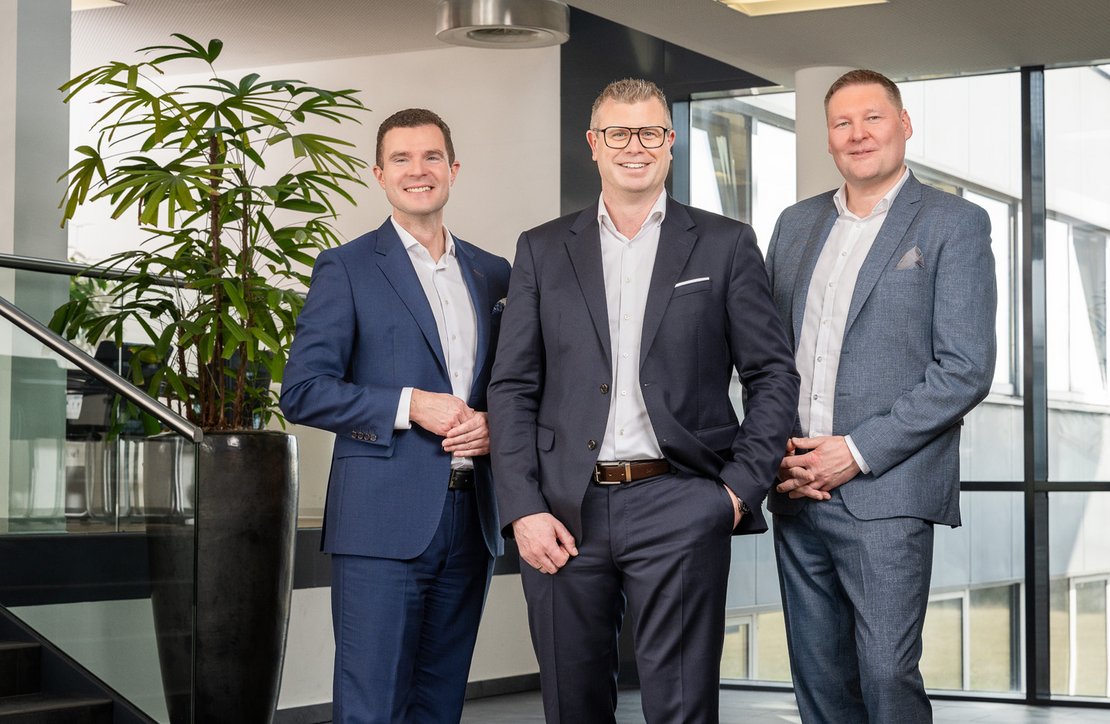
In conversation with the members of the Board of Directors of the POLYTEC GROUP, Markus Huemer (CEO), Martin Resch (COO) and Markus Mühlböck (CFO), about adaptability, ­operational excellence and new directions.

Mr Huemer, you achieved very solid ­results in 2025, although the automotive industry continues to struggle.

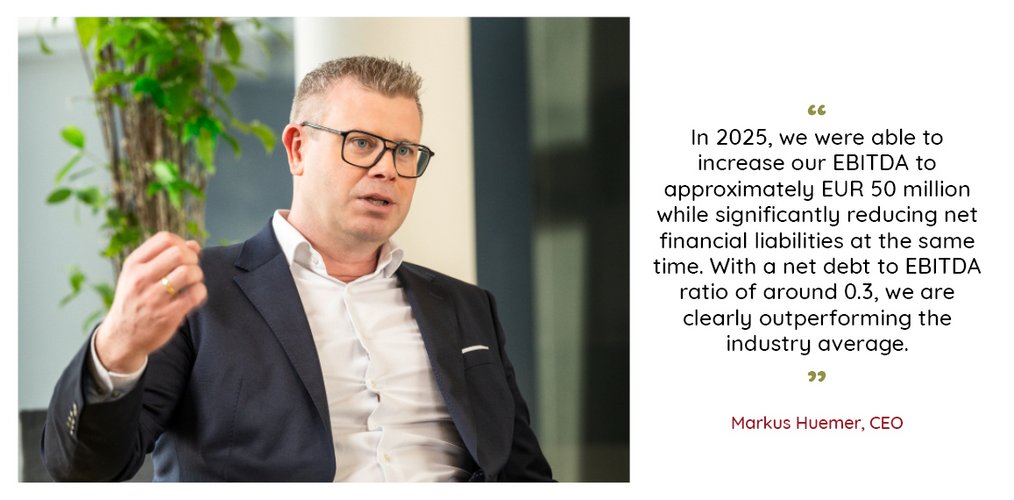
Markus Huemer: In view of the environment, we are quite satisfied with the results. We increased our EBITDA to approximately EUR 50 million while significantly reducing net financial liabilities at the same time. With a net debt to EBITDA ratio of around 0.3, we are clearly outperforming the industry average – even though the current earnings position is not sufficient to fully support a long-term financial forward strategy.

The automotive market is still extremely challenging. In Europe, the production of passenger cars has sustainably declined by roughly 25 percent, leading to considerable overcapacities. Competitive pressure is high – and so is the customers’ buyer power. This situation has been with us for many years and will most likely continue to challenge us going forward. But at least volumes are currently stabilising, though at a low level. So, the everyday defence will continue in the automotive business.

At the same time, we managed to develop our non-automotive business well in the past years. We have been able to tap into new markets in this segment, opening up additional perspectives for the future. Overall, we are therefore quite satisfied with the development. This is also reflected in our financing partners’ trust.

?How did all this come about?

Markus Huemer: The automotive industry has been in a difficult situation for many years. At the latest since “Dieselgate” and the regulatory changes, the industry has undergone fundamental changes. This is why we have strategically realigned our company since 2019 and increasingly focused on differentiation and technological breadth.

An important step was bundling and utilising our technological spectrum more efficiently as part of the POLYTEC SOLUTION FORCE. This enabled us to serve the electromobility sector with different technologies and set ourselves apart more clearly overall. At the same time, we pursued an innovation strategy targeting both new products and new markets – in e-mobility and outside the automotive sector. In the last 18 months, we made significant progress here. 
 

We also consistently adjusted our capacities to the substantially lower demand in the automotive sector. This included structural portfolio measures: for example, in the area of Painted Exterior for passenger cars we sold our plants in England and are currently in the process of closing our plant in Weierbach. In addition, we sold our small metal products division at the beginning of this year. These transactions returned the capital employed despite the market situation and led to positive cash effects, which are also reflected in our balance sheet.

Apart from these structural adjustments, the main challenge in recent years was to manage cost and price developments while keeping all stakeholders on board – i.e. to enforce price increases and avert rising costs, regardless of the structural changes implemented at the same time.  

2025 brought crucial progress in these efforts. We had already taken many measures in earlier years at the intersection of innovation, capacity cuts and capital management, which did not always go without friction. In the past year, things stabilised at a new level. In many ways, 2025 provided validation for the route we had taken.

Which measures specifically did you implement in 2025?

Martin Resch: First and foremost, we consistently enforced the efficiency programmes we started in 2024, which included measures to optimise material costs, improve data transparency and further develop our organisation.

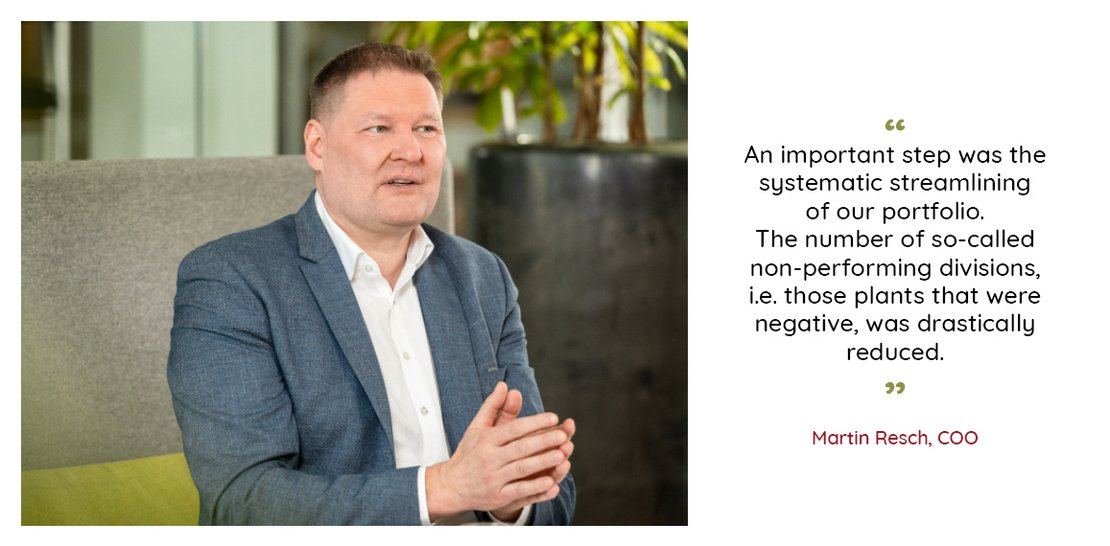
We drastically reduced the number of so-called non-performing divisions, i.e. those plants that were negative, while at the same time significantly improving our working capital management.

Moreover, we started to thoroughly analyse and actively manage our production portfolio. The goal is to optimise our footprint: each plant should have the portfolio best suited for its technologies and expertise. Our plant closures were carried out against the backdrop that our customers’ call-offs were difficult to plan or that, in some cases, there were no call-offs at all. As a result, production was not always ideally allocated to the individual plants. After the plant closures, we will now optimise this based on the new reality. The aim is a redistribution, enabling us to create maximum synergies and establish competence centres with optimised utilisation.

As mentioned before, we are also working on innovations, new products and – where possible – on the development of new markets. 


Why did you sell your Painted Exterior plants in England?

Markus Huemer: That was a crucial structural decision. We had been focusing on niches with relatively low volumes and high complexity in this segment. However, the quantities achieved were not even close to expectations, which made business difficult to plan.

In addition, programmes for new battery-electric vehicles in which we had intended to invest were cancelled. Therefore, we stopped the investments in time and analysed, together with our customers, which role a niche supplier in this segment could play at all in the future. The answers were clear. Against this backdrop – as well as due to the closure of our plant in Weierbach, which is part of the same product segment – we reached an agreement with another supplier who wanted to consolidate capacities. This way, we found a good exit solution for all those involved. We were therefore also able to significantly reduce the capital employed while at the same time cutting our net financial liabilities by a significant amount in the tens of millions.  


Let’s talk about capacity again: ­compared to 2017, you now have around 1,000 fewer in headcount and eleven fewer plants ... 

Martin Resch: The reasons lie, as implied before, in several structural changes. Since the introduction of the WLTP standards in 2017, some product segments have changed significantly – for example the diesel segment or painted exterior components. In many cases, accessories series were discontinued completely or replaced by equipment lines whose volume exceeds our market niche. At the same time, technological changes occurred, for example, a shift from composite components to injection mould solutions for commercial vehicles.

Against the backdrop of these volume shifts and technological developments, we adjusted our structures early: we closed plants, transferred thousands of pieces of equipment, i.e. machines and tools, across Europe and thus consolidated production. At the same time, we continued to invest: in new products, new markets and new plants – for example in new locations in South Africa and England, the expansion of our plant in Ebensee, or an acquisition from a competitor’s insolvency.

Overall, our company was constantly in motion in recent years – but ultimately the result was positive. Start-up problems of new programmes, which we were confronted with in 2023 and 2024, not least due to the structural changes in our footprint, have now been largely eliminated due to targeted organisational changes. 


Do you intend to further reduce capacity in the medium term, or will growth be on the agenda again in the future? 

Markus Huemer: We have been in crisis mode for about eight years – I sometimes call that a “rally without a route book”. Adjusting our capacity was a fundamental prerequisite to ensure that POLYTEC is in a solid position today and has good future prospects.

What is remarkable is that we have been able to largely maintain our revenue level despite a market decline by about 25 percent. At the same time, we reduced our capacity significantly. This shows that we have made substantial progress in operational excellence.

Whether we will increase capacity again in the future is less a matter of strategy for us than a matter of opportunities. In the automotive sector, we don’t expect any organic growth and are therefore cautious with investments. Our focus here is on running the business efficiently and keeping our eyes open for potential opportunities for consolidation. Wait and see, as it were.

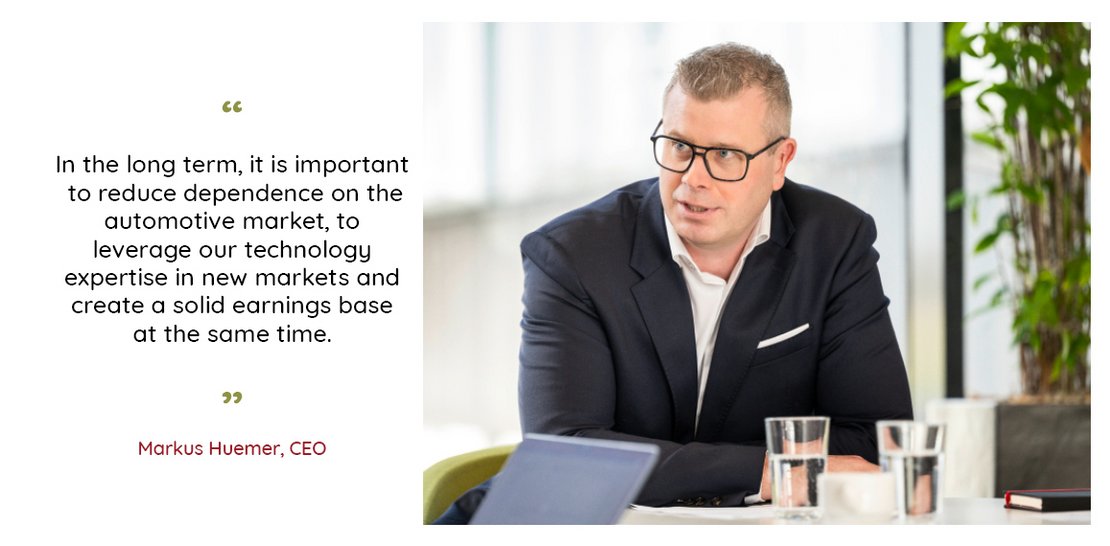
In contrast, we see considerable potential for organic growth in the non-automotive sector. Here, we already have expertise, products and diversified market access – for example through existing customer relationships – and were able to develop further market opportunities in the last one and a half years. That is why we are much more willing to invest in this growing market. 

You mentioned operational excellence, what exactly do you mean by that?
 

Martin Resch: Operational excellence is based on a clear lean management approach in our company. It is about the efficient interaction of people, culture, processes and data.

To this end, we have reorganised our internal OpEx System “PPES – POLYTEC Performance & Excellence System”. In 2024 and 2025, we streamlined and standardised processes. As a result, new series can be launched significantly more smoothly today than in the past.

At the same time, we are developing our concept of a “Smart Factory” towards a “Smart Company”. This also includes targeted utilisation of artificial intelligence – both in production and in administrative areas.


AI requires high data quality. What does data quality look like at POLYTEC?

Markus Mühlböck: We also have high expectations in this area. Being a strongly finance-driven company, we have traditionally had very comprehensive internal reporting with regard to financials. However, our heterogeneous ERP landscape – and consequently the availability of current non-financial performance indicators – has been a challenge so far.

As part of our efficiency programme, we therefore launched an initiative in 2024, which was designed to better integrate all data. The result is a new reporting portal, which now provides real-time data for all relevant decision-makers.

The big advantage is that we can now map operating indicators and performance drivers in a consistent manner across all plants. This involved major conceptual and digitalisation efforts and also required a deep process understanding. But the effort paid off: the quality of the data base for our decisions has improved substantially.

Thematically, we primarily focused on working capital, assets and operations in 2025. In 2026, additional reporting from sales and the operating business will follow. 

Are you also planning investments in addition to all these activities and measures?

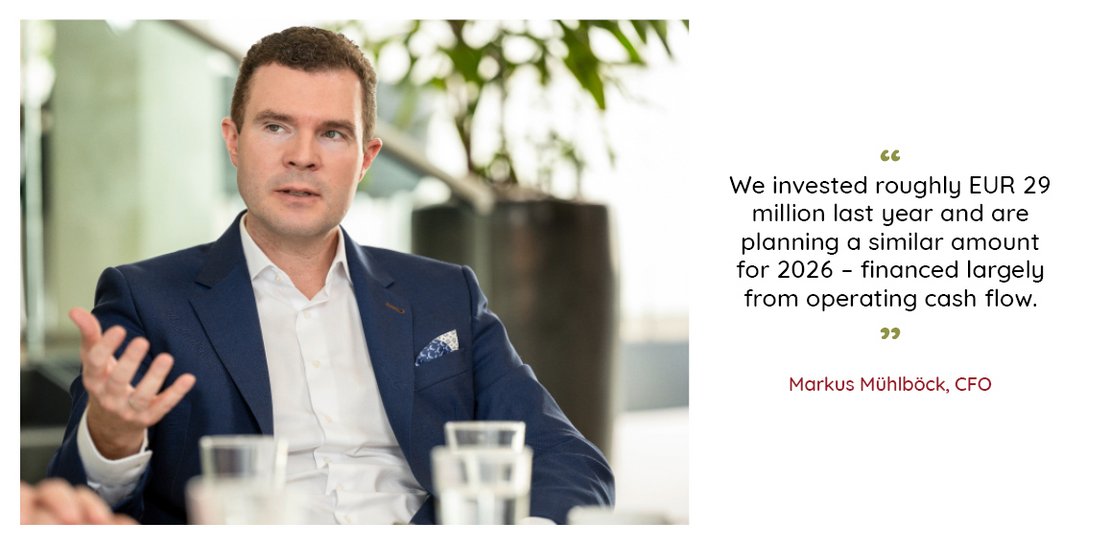
Markus Mühlböck: Absolutely. We invested roughly EUR 29 million last year and are planning a similar amount for 2026 – financed largely from operating cash flow.

In 2025, our investments mainly concentrated on concrete customer projects, for example the full automation of a high-runner product at the Lohne plant or a new manufacturing line for a ­German OEM in Chodová Planá. In addition, we expanded our painting capacity for Truck, Bus & Agricultural components by transferring a paint line from our plant in Turkey to use resources effectively.  

In 2026, we are primarily planning investments in stronger vertical integration in material production. To be specific, we are investing in the production of UD tapes and semi-finished products. Here, we acquired a complete business unit consisting of a customer base, patents and facilities. In doing so, we can generate new possibilities in material development and increase our value-added depth. In addition, this investment is an important enabler for structural components in both the automotive and non-automotive sectors. In the past, we purchased these materials; in the future, we will possess our own material ­expertise.

In recent years, you have significantly shifted your focus towards non-­automotive and increased your medium-term target for this segment from 20 to 30 percent of total revenue. Is this business doing so well?

Markus Huemer: The business is going well – and it is highly promising, especially recently. We had been looking for new markets outside the automotive industry since 2019. One area we originally focused on was infrastructure for new forms of mobility, but this market is developing more slowly than expected.
The reusable packaging segment is ­currently proving to be all the more dynamic. Here, we are working with different partners on a number of projects, some of which are nearly ready to be launched on the market. A global trend towards sustainable logistics solutions is supporting this development.

The products range from logistics boxes for retailers and plant trays to fireproof heavy-duty pallets, and projects such as BOOXit. The wide variety of applications and potential markets has allowed us to increase our medium-term revenue target for the non-automotive segment to 30 percent.

At present, the share in revenue is still substantially lower, but the potential is considerable and we believe that there is a high probability that we will generate significant revenue from the many ongoing projects.


What is the basis for this success?

Markus Huemer: t is based on a highly targeted transfer of know-how from the automotive sector, coupled with patience and perseverance.

In this process, we use different paths to access the market: existing customer relationships, industrialisation and scaling expertise, and the development of new products. By now, we have developed a clear methodology for applying our technological expertise to appropriate market potential.  

We are benefiting from global megatrends – for example towards sustainability – and in some cases also from partners who have access to the appropriate sales channels. Moreover, our technological reputation has been clearly established even outside the automotive industry by now. 


What about inorganic growth? You were talking about opportunities before …

Markus Huemer: The European supplier market – particularly around the ­German OEMs – is currently under massive pressure. In many cases, the earnings position of companies is poorly correlated to capital employed. Conversely, car manufacturers managed to achieve record results again and again, even in crisis years.

With the market having declined by approximately a quarter, we think there is a need for consolidation in the supplier industry. Whether this will result in concrete transaction options for us is currently hard to predict – which is why we are following an opportunistic approach.

We have proven in the last four decades that we are able to implement consolidations successfully – both internally and externally. If the right opportunity arises, we are generally ready to review solutions across companies. We are in a position to do so thanks to our solid balance sheet and the trust that our banks and investors place in us.


Speaking of investors: given the number of international conflicts and technological developments, the capital market is showing strong interest in the defence sector and artificial intelligence. Are you also playing a part in these sectors?

Markus Huemer: First and foremost, we are, and will remain, an automotive supplier and producer of high-quality plastic products. The defence market comes with high market entry barriers – for example regulatory requirements, very specific decision-making processes which we are not familiar with, and considerable investments. Therefore, we do not presume to play a substantial role there in the short term.  

However, some of our products from the Smart Plastic Applications segment could also be interesting for military applications. One example is the BOOXit system, which has been developed for civil purposes, but is also suitable for military logistics. Numerous international inquiries confirm this potential.

Martin Resch: As far as artificial intelligence is concerned, we mainly use this technology to increase the efficiency of our processes. This applies to production planning and control, quality management or the stability of manufacturing processes. But we also see interesting potential in the administrative area – from standardised activities to the use of several AI agents which are controlled by employees. 
 

In 2026, POLYTEC is celebrating its 40th anniversary, and your IPO on the Vienna Stock Exchange took place 20 years ago. When you reflect on this period, what stands out?

Markus Huemer: POLYTEC started out as a small business run by my parents. Today, we employ several thousand people and enjoy an excellent technological reputation in the automotive industry, which has very high demands. Now we have also transferred this expertise to the non-automotive sector.

The overall very positive development of the past four decades definitely makes me proud, but most of all, it means great responsibility – towards our customers, financing partners and shareholders as well as our employees. 

We repeatedly also went through difficult phases in the past 40 years – and have always emerged stronger. That shows that POLYTEC is adaptable and versatile. Since I was appointed CEO of POLYTEC in 2019, but also in the years prior to that, our industry has experienced a series of exceptional crises – from the changes resulting from the introduction of the WLTP standards to the corona pandemic and the subsequent supply chain problems to geopolitical conflicts. We coped well with these challenges, which makes me confident for the future.

On the stock market, we also experienced ups and downs in the last two decades: we saw share prices of EUR 20 and more, but also of EUR 1. In any case, we will take the anniversary of our IPO in 2006 as an occasion to further intensify our communication with the capital market. Ultimately, share prices must now reflect the company’s operational performance.

In 2025, the responsibilities within the Board of Directors were ­redistributed. Tell us about your experience with these changes.

Martin Resch: I am very pleased that I am now responsible for Engineering. Especially on the way to operational excellence, the interaction of Engineering and Operations is crucial: we have to develop the right products in such a way that we can subsequently manufacture them efficiently. The most recent investment in new material technologies such as UD tapes and organosheets is opening up additional opportunities for our Engineering.

We generally place great emphasis on a culture of innovation. A current example is our internal competition titled “Your Passion Creates Innovation”, which turned out to be a great success: we received more than 200 submissions from our employees and are currently evaluating the best ideas. Continuously engaging with our customers is equally important: we present our innovations to them on-site at our POLYTECDays. At the same time, we focus on close collaboration with universities and on our presence at important trade fairs.

Markus Mühlböck: In 2025, I additionally took responsibility for Procurement, an area with great leverage for our business. Right at the very beginning, we were faced with challenges caused by new tariffs and rapid changes in the market. Thanks to our competent und motivated team, we were able to respond quickly. In the future, I see a lot of potential in the digitalisation of procurement. At present, we are challenged by the upheavals caused by the Iran war and the resulting massive price increases. 


Let’s talk about financial topics now: what about (re-)financing? Will there be any major need for that in the near future and do you expect any difficulties?

Markus Mühlböck: We made scheduled repayments of EUR 40 million in 2025, of which about EUR 15 million was refinanced – especially in connection with the maturity of a promissory note loan tranche in November. Thanks to the trust placed in us by our banking partners, we were able to secure refinancing without any problem. We already managed to refinance more than EUR 100 million in 2023 and early 2024 – back then in a difficult market environment and tight earnings situation. This may also be due to the fact that we never once breached a covenant despite all restructuring activities in the past years, and therefore proved to be reliable to our financing partners. In addition to the trust of our principal bank, we also won new financing partners on this basis and established trustful collaboration with them.

In 2026, approximately EUR 35 million are due for scheduled repayment. We do not currently see any difficulties in meeting these payments. At the same time, we also have financing partners who are available for potential investments or for M&A activities.


How can your shareholders expect the share to perform?

Markus Mühlböck: We are not satisfied with our current market capitalisation of approximately EUR 85 million. It correlates poorly to our equity of EUR 220 million – as it falls short of this value by around 39 percent.

However, POLYTEC is not the only company affected by this undervaluation – so are many other businesses in the automotive and automotive supplies industry.

Nevertheless, we are convinced that our results of 2025 and the strategic realignment of our portfolio will be increasingly recognised by the market. In the medium term, at least the level of our equity should be achievable. 


What about dividends?

Markus Mühlböck: This is ultimately the decision of the annual general meeting. But in principle, our previous policy is still valid: if we achieve positive net profit, we also strive to distribute dividends. We will adhere to this policy and propose a dividend of EUR 0.20 per share to the annual general meeting this year.


Finally, let’s take a brief look at the future. What are your revenue and earnings targets for this year and the coming years?

Markus Huemer: We expect revenue in the automotive segment to decline due to the previously mentioned plant sales and closures. At the same time, we antici­pate significant growth in our non-automotive business.